
Anti-Aging & Longevity Peptides
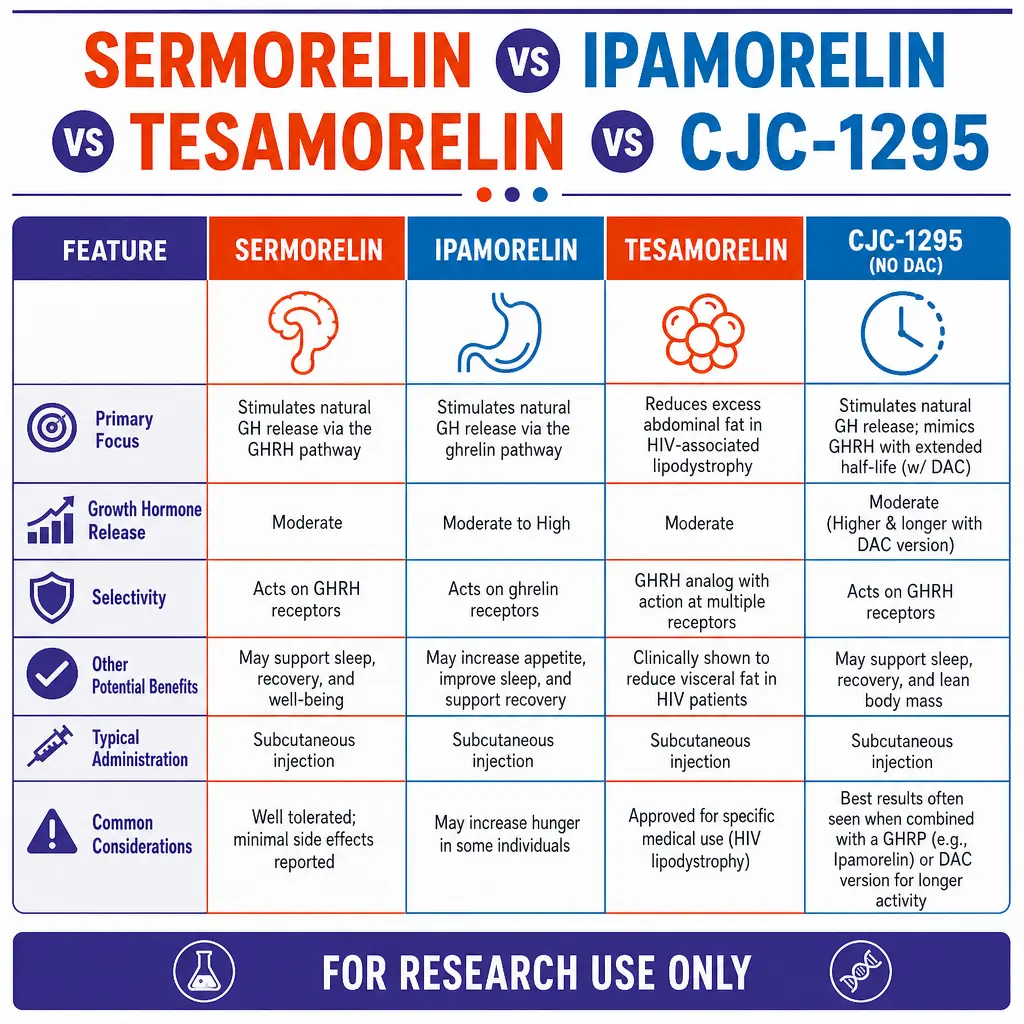
Every comparison question in this category has the same answer underneath it. These four compounds split into two groups hitting two different receptors, and once

Every comparison question in this category has the same answer underneath it. These four compounds split into two groups hitting two different receptors, and once
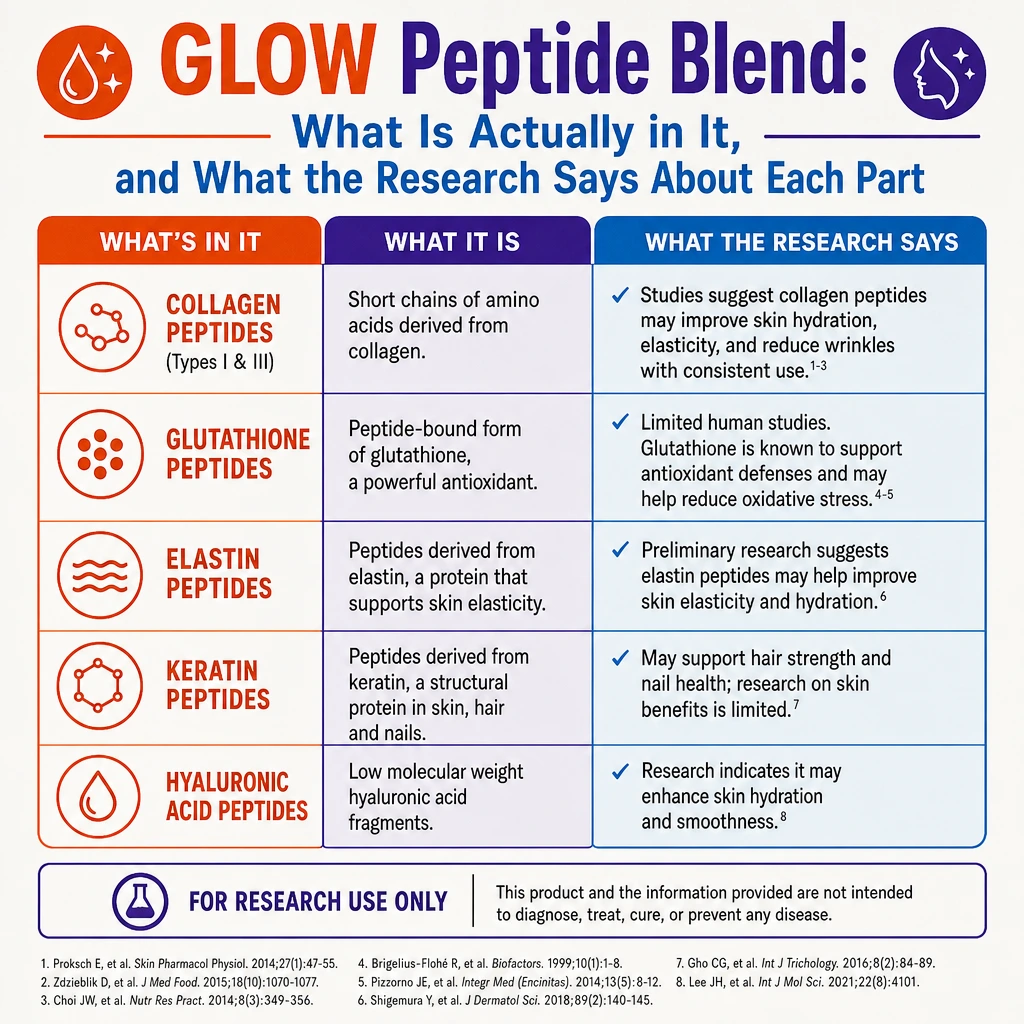
There is no study of the GLOW blend. What exists is fifty years of work on GHK-Cu, a large pile of rodent data on BPC-157,
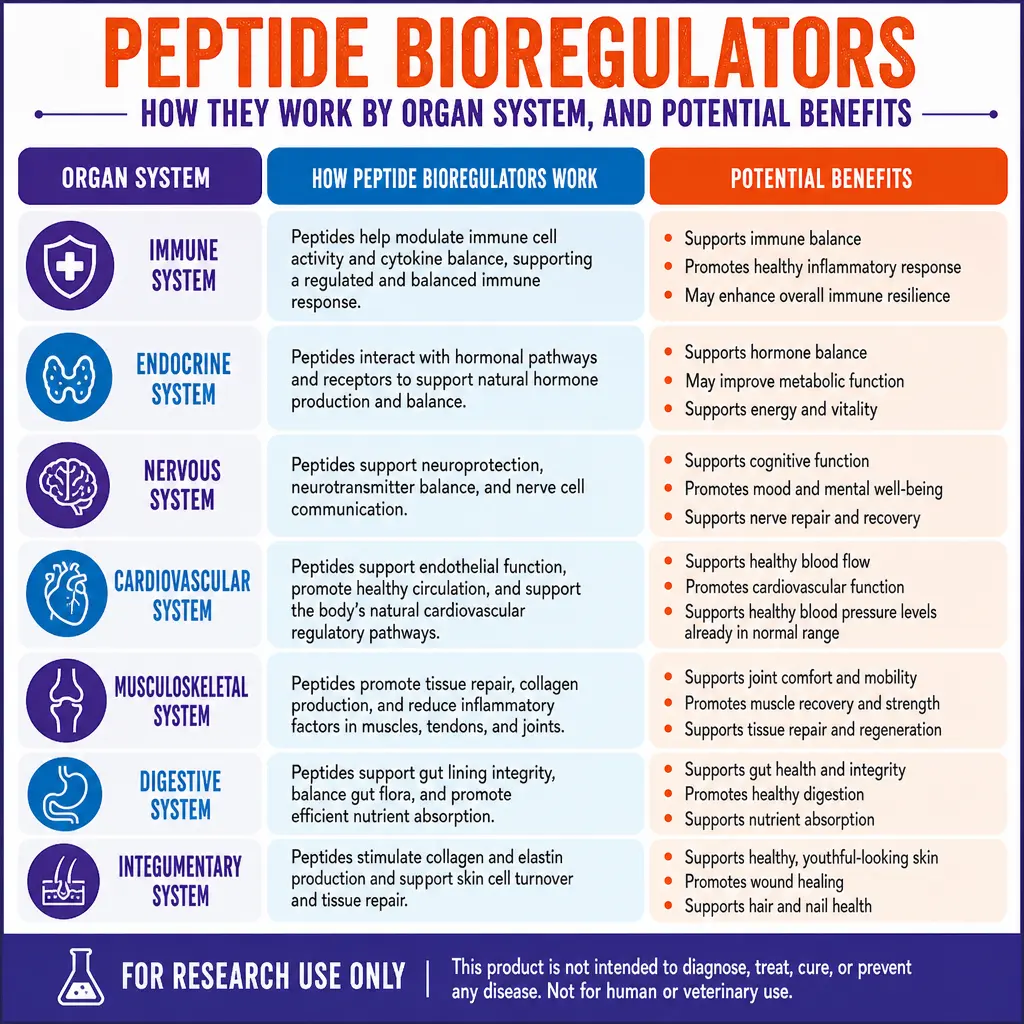
Peptide bioregulators are a family of very short synthetic peptides, most of them two to four amino acids, each tied to a specific organ. They
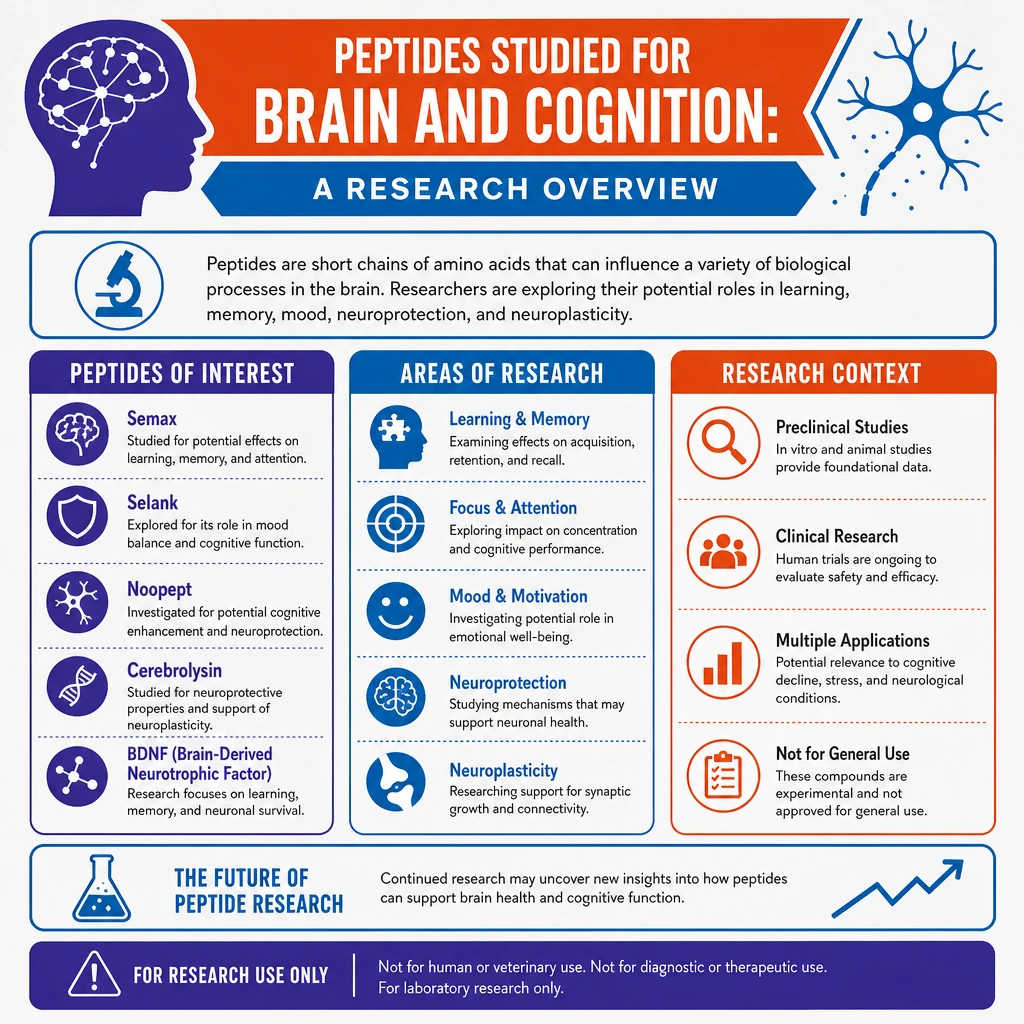
Several research peptides are studied for how they affect the brain’s plasticity machinery in animal and cell models. This research-use-only overview compares four of the
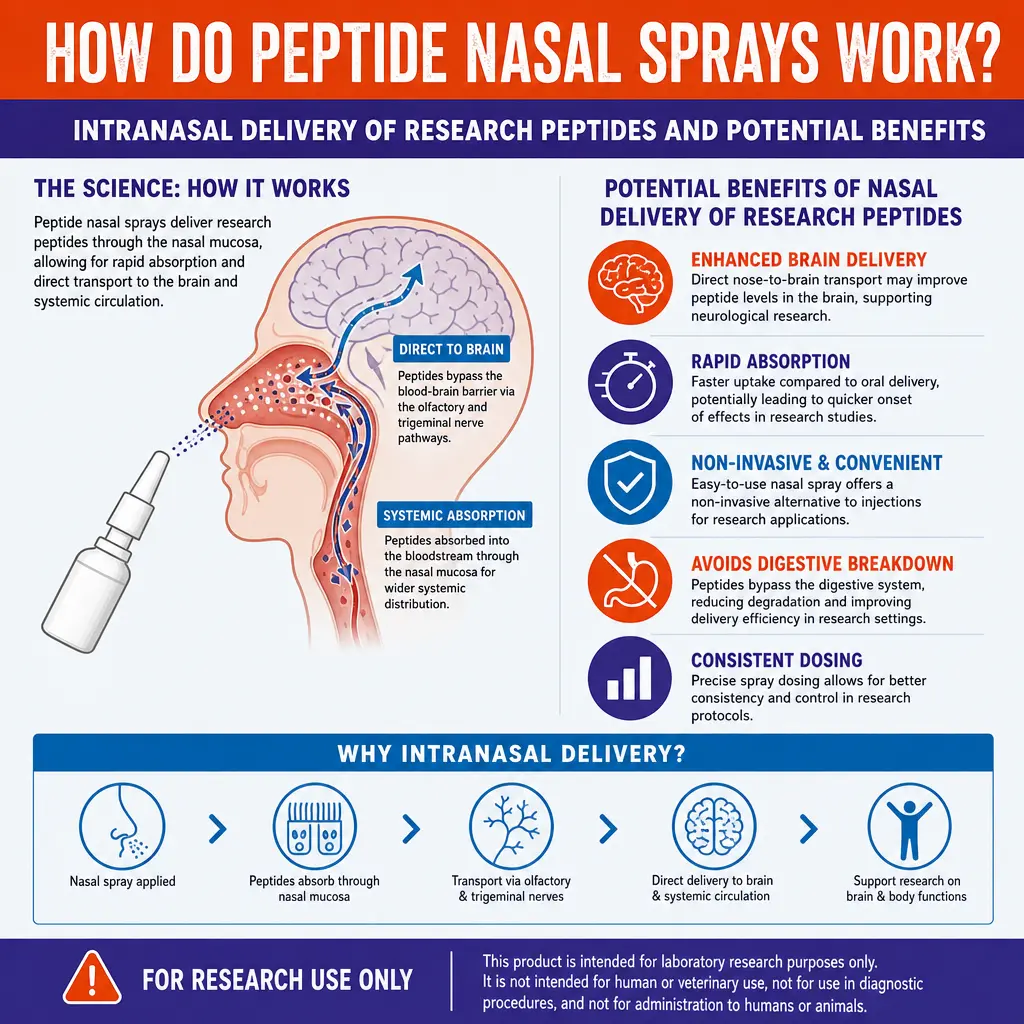
The nasal route is not a shortcut around pharmacology. It is a real absorption surface with real limits, and those limits are mostly set by
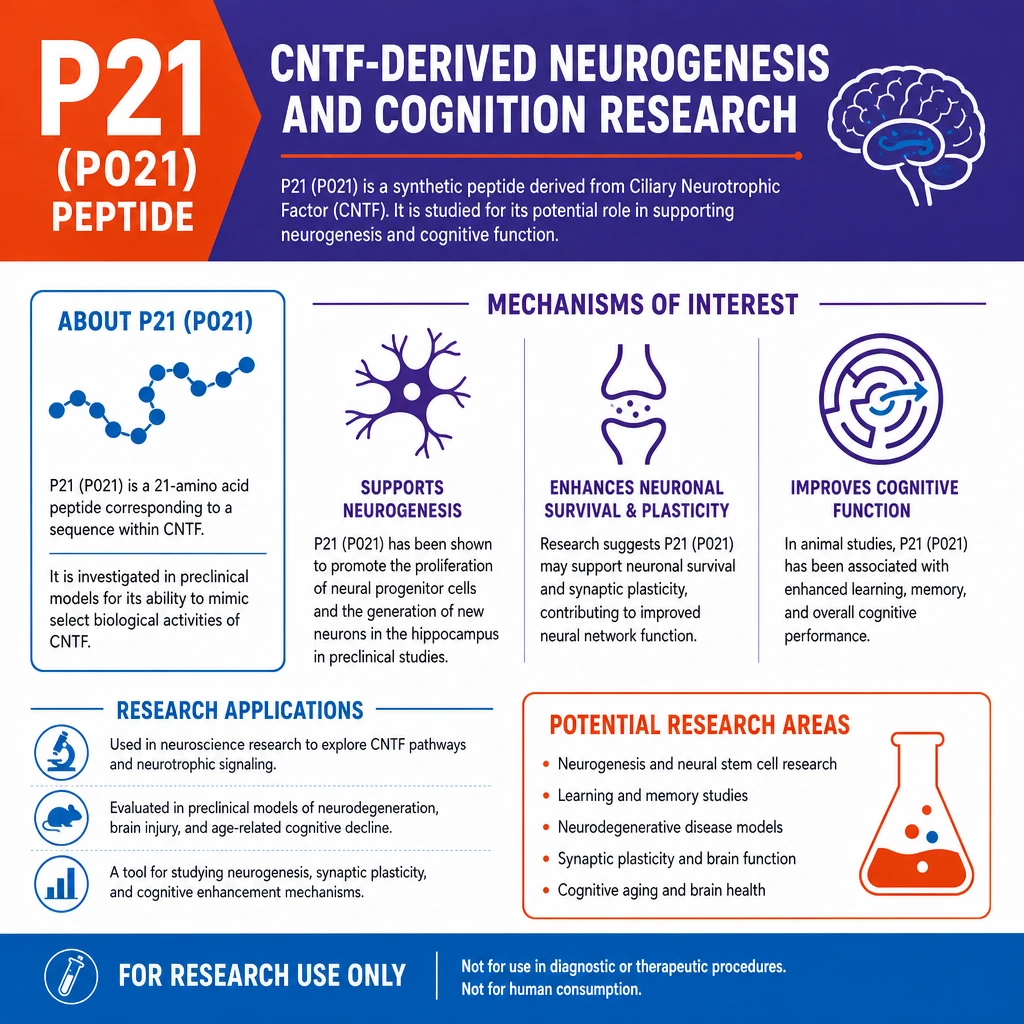
P21 (P021) is a small synthetic peptide built to capture the brain-boosting side of the growth factor CNTF while dropping its appetite-suppressing side. This research-use-only
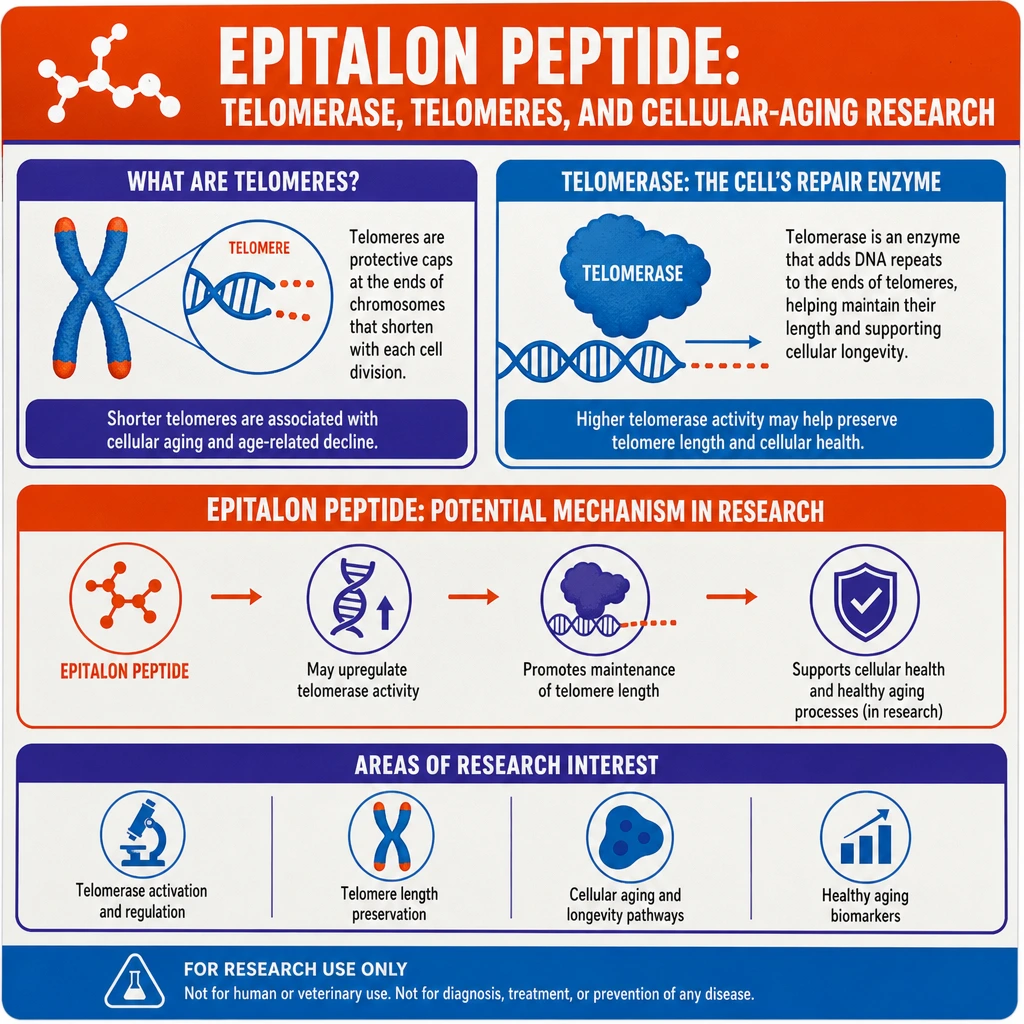
Epitalon is a synthetic four-amino-acid peptide (AEDG) studied for one striking laboratory finding: in human cell cultures it can switch on telomerase and lengthen telomeres.
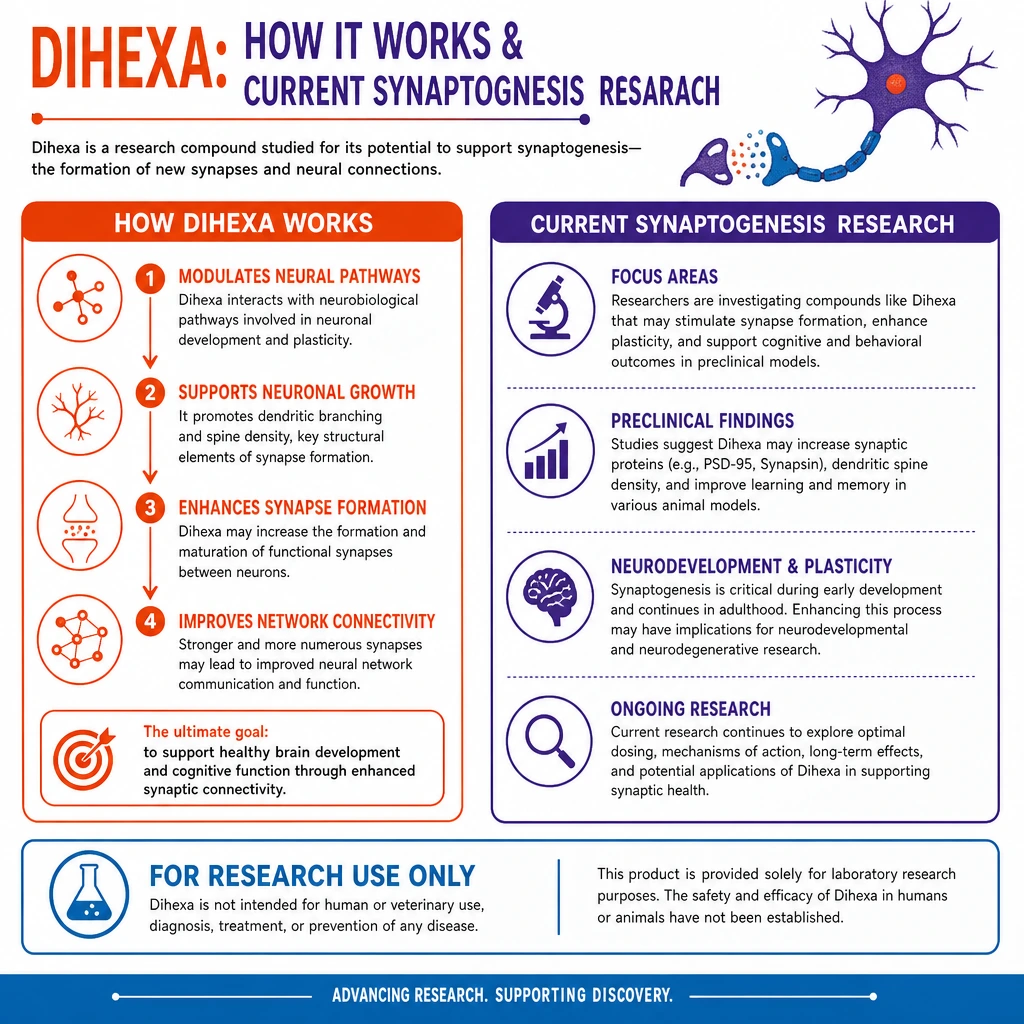
Dihexa is a metabolically stabilized angiotensin IV analog studied as a potentiator of HGF/c-Met signaling in the brain. This research-use-only reference covers how it engages
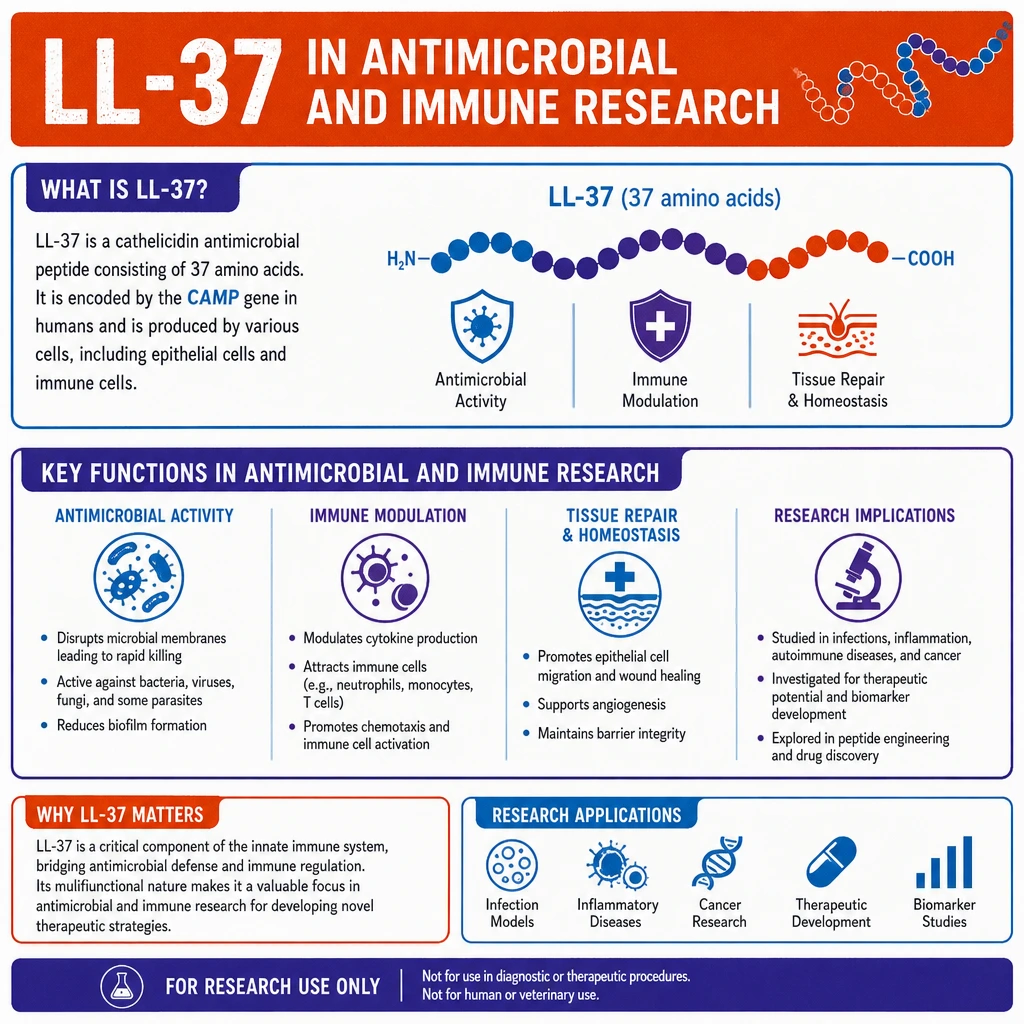
LL-37 is the only human cathelicidin antimicrobial peptide, a 37-residue cationic peptide that both punctures microbial membranes and signals to the immune system. This research-use-only
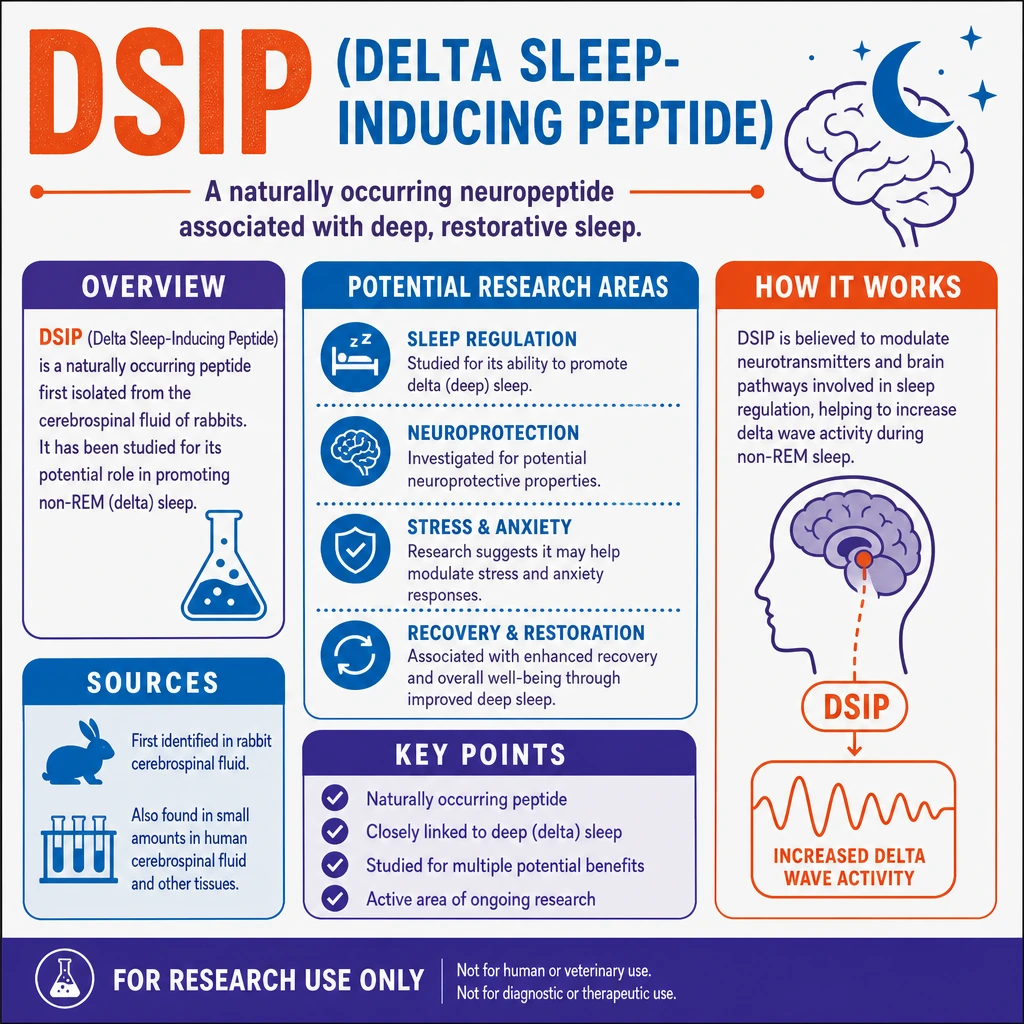
DSIP is a nine-amino-acid neuropeptide isolated in 1974. In some animal studies it raises slow-wave sleep; in others it shows no effect, or the opposite.
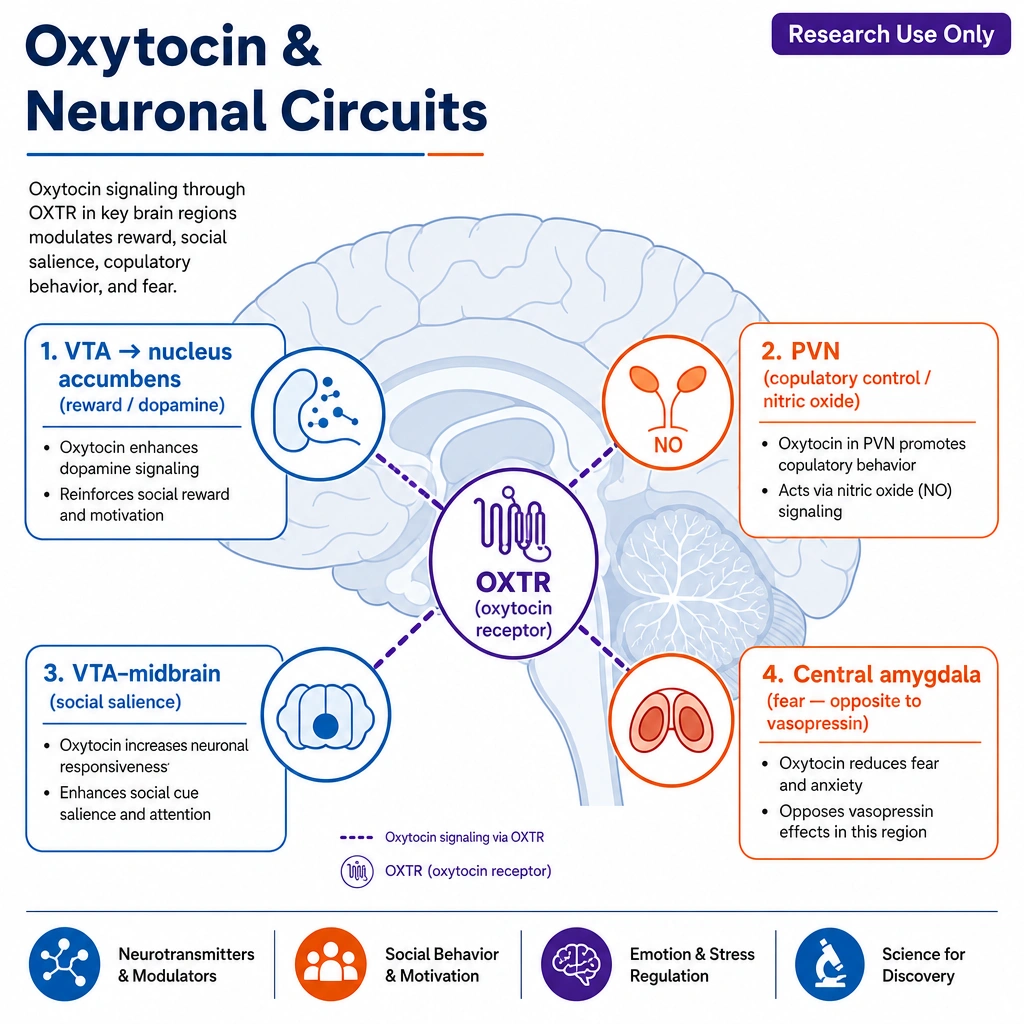
Oxytocin signals through the oxytocin receptor (OXTR) across many neuronal circuits. This research-use-only reference reviews OXTR signaling, mesolimbic reward (VTA-nucleus accumbens dopamine), copulatory PVN circuits,
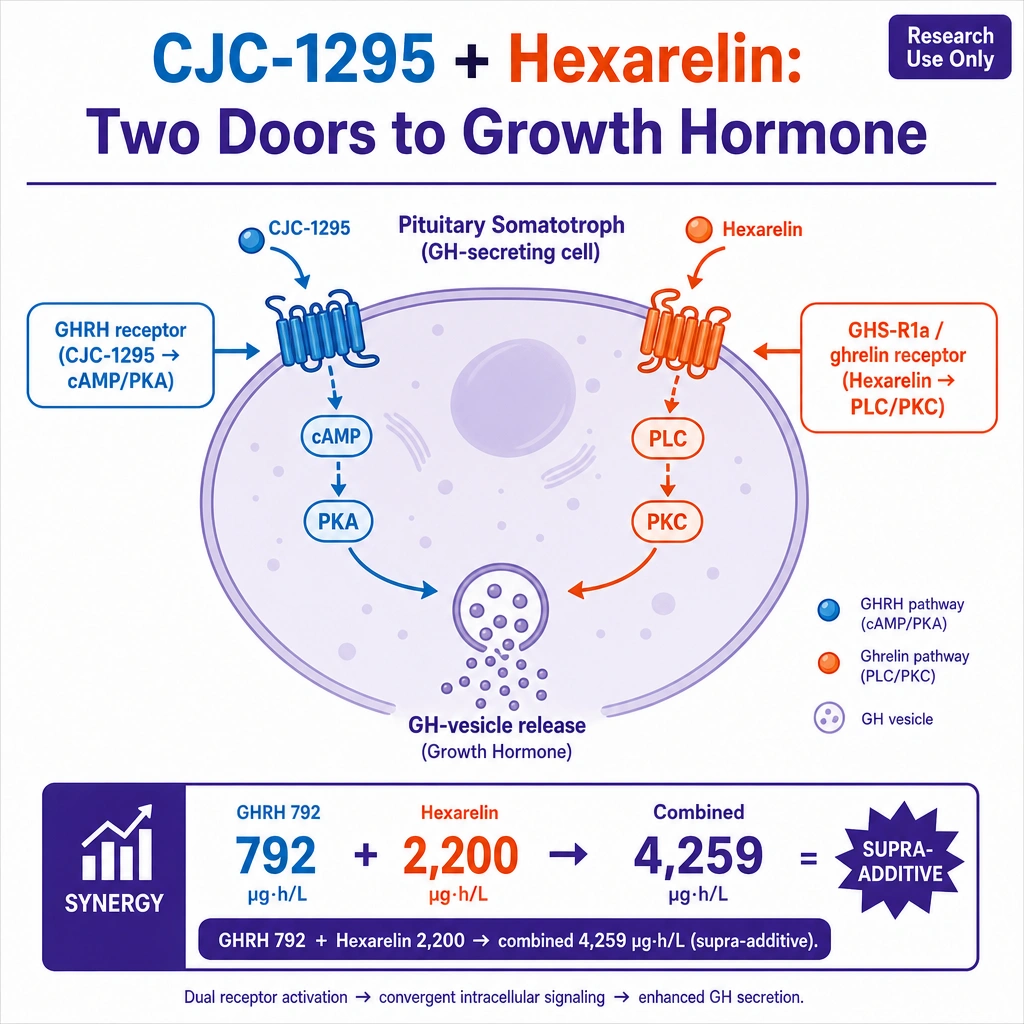
CJC-1295 (a GHRH analog) and Hexarelin (a growth hormone secretagogue) stimulate somatotrophs through complementary pathways. This research-use-only reference reviews their GH/IGF-1 signaling, synergy, and Hexarelin’s